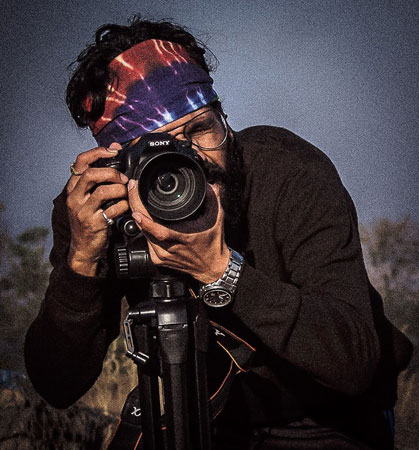
Many aspiring students dream of making it big on the real stage or the reel screen of Hollywood Studios. Philippines has a host of Acting & Drama Schools that offer full time Theatre and Acting classes for individuals seriously pursuing the fields of Stage, Film and Television.
The international Film Academy of Film & Television (IAFT) has been serving ambitious filmmakers and actors, since early 2004 to find their place in the industry with their knowledgeable counselors and guides who help you learn exactly what you need to know to help start your career towards Hollywood. IAFT offers education programs in serious Film making, Performing arts, Acting, 3D animation and other short diploma courses. IAFT also has campuses in Hong Kong and Cebu, Philippines.
IAFT Cebu, Philippines is a film school that delivers an educational experience that reflects Hollywood roots and traditions. The training modules at IAFT include substantial quantities of real time experience under the attention and supervision of recognized industry mentors. IAFT Cebu, Philippines has also been voted as "one of the best film schools in the world" by the Hollywood Reporter.
WHY IAFT Cebu, Philippines?
The main business of IAFT is to turn “dreams into reality” for most of its students. The working and mechanics of the real world are totally different from the reel world of filmmaking. To make a mark in the world of “make-believe”, which is the art and skill of making movies for people to believe in takes in years of hard work and perseverance. The international Film Academy of Film & Television is here to help you turn your dreams of becoming an actor or a filmmaker into a reality. IAFT has been aiding and assisting aspiring filmmakers and actors find their place in the smaller medium of TV and the larger than life Film industry since 2004. IAFT is popular for its finely tuned Certificate and Diploma programs in Filmmaking, 3D Animation, and the Performing Arts – Acting. IAFT also often conducts various Short-Term Workshops on topics such as film-making, screenwriting, acting, 3D and motion graphics. Last but not the least, IAFT Cebu's programs are registered and recognized by the Republic of The Philippines’ Technical Education Skills and Development Authority (TESDA).
Genre - Drama.
Theme - Faith. " A depressed young girl struggles to get over her parents’ death by reading mother’s journal "
The Journal is an another short film Directed by me (Aditi Despande) and written by Marini Ferandez. This is project for 2nd term where we have to direct a shortfilm written by someone else.
Why EEMA for IAFT?
Guaranteed Enrollment / Admissions.
EEMA Panel decides eligibility of student.
Interview with IAFT fixed.
Airport Transfers Arranged.
Lodging guidance with Cell numbers provided.
Booking of Hotel close to IAFT Cebu, Philippines for a Week (Familiarization Tour)
1 Way / 2 Way Airline Ticket booked with shortest transit time to Cebu, Philippines.
Course fees paid directly to IAFT. (International payment/transfer of fees after receiving of Invoice).
Placement fees deposited in an Escrow Account. What’s this? Click here
After successful completion of courses, students have an option to work with Big Foot, the makers of F1 TV.
15% Discount on Fees (If Paid 3 Months in Advance before Starting Date of Course)
10% Discount on Fees (If Paid 2 Months in Advance before Starting Date of Course)
05% Discount on Fees (If Paid 1 Month in Advance before Starting Date of Course)
IAFT COURSE DURATION
FILM MAKING
ACTING
3D ANIMATION
Certificate Course
05 Months
05 Months
05 Months
Diploma Course
10 Weeks
10 Months
01 Year
Workshop Course
10 Weeks
10 Weeks
10 Weeks
Less Teaching More Training
IAFT is here to help you learn exactly what you need to know to start building your dream career and that too with a, “HANDS ON APPROACH” attitude. Whether your passion is filmmaking or acting by the time you graduate, you will have the skills and knowledge essential to be successful in the television and film industries of the world. IAFT has students from the different countries of the world. Filipino students and International foreign students are no strangers to IAFT as they graduate together from our certificate or diploma programs.
PROGRAM DESCRIPTION: Over the course of two-10 weeks terms, the Certificate Program develops animation and Computer-Generated Imagery skills including 3D Modeling, Texture Mapping, Animation, Rendering, Sound Design, Writing and Editing. A combination of instruction and hands-on training introduce the vital competencies to being 3D Computer Animator.
PROGRAM OBJECTIVES: The educational objectives of this program are to teach fundamental competencies of CGI (computer generated imagery) to worldwide industry standards; give students training that is essential for building a career in film, television and online animation; offer students opportunities to work with active industry professionals; learn the importance of developing rich stories, pitching quality ideas, understanding the production pipeline, meeting budget and schedule constraints and following through with post-production; encourage students to be creative, innovative, responsible and professional in all of their work.
Students will learn to:
Learn the basic foundations on how to create and develop their own characters
Understand the importance of art design and develop a look that is desirable on a 3D medium
Realize and create 3D environments
Encourage students to be creative, innovative, responsible and professional in all of their work
NO. OF WEEKS: 20
The program consists of lecture hours consisting of theory or new principles, and on-campus laboratory hours consisting of supervised student practice of a previously introduced theory/principle during which practical skills and knowledge are developed and reinforced.
This course is designed to enhance the knowledge, skills and attitudes of a trainee/student on core competencies such as; Produce Key Drawings for Animation, Create 3D Animation and Use an Authoring Tool to Create an Interactive Sequence in accordance with the industry standards. It includes common competencies such as; Apply Quality Standards, Perform Computer Operations.
It also includes basic competencies such as; Lead Workplace Communication, Lead Small Teams, Develop and Practice Negotiation Skills, Solve Problems Related to Work Activities, Use Mathematical Concept and Techniques and Use Relevant Technologies. The program is comprised of five 10-week terms.
PROGRAM OBJECTIVES:
The educational objectives of this program are to teach fundamental competencies of CGI (computer generated imagery) to worldwide industry standards; give students training that is essential for building a career in film, television and online animation; offer students opportunities to work with active industry professionals; and learn the importance of developing characters, conceptualizing environments, rigging and animating characters, rendering their final images and following through the entire post production pipeline.
Students will learn to:
Learn the basic foundations on how to create and develop their own characters
Understand the importance of art design and develop a look that is desirable on a 3D medium
Realize and create 3D environments
Rig and animate their own characters
Composite their rendered images and add visual effects in post
Understand the entire 3D production pipeline and following through with post production
Encourage students to be creative, innovative, responsible and professional in all of their work
NO. OF WEEKS: 50
The program consists of lecture hours consisting of theory or new principles, and on-campus laboratory hours consisting of supervised student practice of a previously introduced theory/principle during which practical skills and knowledge are developed and reinforced.
Our acting school isn’t for everyone; it’s for people – like you – who are really serious about their acting careers. As any working actor will tell you, practice and training are essential to make you stand out from the thousands of others trying to start careers acting.
In the Certificate Program, you will learn acting for film and television, as well as the basics of voice, movement, improvisation, the history of acting, and more.
Throughout the 22 week program (two 11-week terms) you will have opportunities to appear in IAFT student films, making our acting program a coveted opportunity for serious acting students.
PROGRAM DESCRIPTION:
The program offers a comprehensive approach to acting, movement and voice. Each term, students are assigned material from both the film world and the stage to rehearse and then present to a live audience. Additionally, acting students will be eligible to perform in student films produced in the IAFT Filmmaking Program, creating a dynamic synergy between the two programs. The Certificate Program in Performing Arts — Acting is comprised of two 10-week terms. Students attend class four days a week with an additional average 8½-hour on-campus lab period per week. The IAFT Acting Program is unique because students pursue their training observing the best-practice principles of stage and especially acting for the camera. And, significantly, it offers the opportunity for the student to perform frequently in both mediums. The maximum students-to-teacher ratio in a classroom or lab session is 12:1.
PROGRAM OBJECTIVES:
The program provides theoretical perspectives and weekly practice of relevant, functional actor techniques (Stanislavsky, Meisner, Second City). A prominent feature of our program is frequent performance as a conditioning tool to prepare the actor to work in a professional setting. The intent is to train students for work in film, television, theater, or any of the wide variety of commercial and specialized niches in the media industry (instructional or corporate film, voice-over artist, etc.). For students who already have some training and performance experience, IAFT offers an opportunity to enter a workshop-intensive environment to polish your technique and flex your performance muscle.
Students will learn to:
Interpret contemporary film and stage material—pursuing character and story analysis to feed the actor’s imagination so as to make the best choices possible.
Engage weekly in structured presentations, practicing in collaboration with directors, other actors, and writers — all designed to lead you toward an interpretation of the role best suited to the story.
Investigate and utilize improvisation and technique exercises toward building spontaneity, specificity, and the ability to work with — and off — another actor’s behavior.
Improvise solo and with one or more actors, in non-scripted scenarios, exploring an open, relaxed, and spontaneous approach to all performance work.
Discuss and examine the architecture of auditions and casting calls in various markets: also, prepare and try out audition material under mock audition scenarios — additionally, you will have numerous opportunities to audition for actual projects.
Observe the signature techniques of acting for film, experimenting with speech, language, gesture, pacing, physical blocking, objectives and levels — all this to get a clear and specific sense of your relationship to the camera, developing a distinct grasp of the difference between film and stage — and what the two disciplines share.
Understand and appreciate the role of crew members responsible for production, camera, lighting, sound, costumes, makeup, props, and set design.
Develop a sense of professional etiquette to facilitate a consistently successful, harmonious approach to working with fellow actors, crew, directors, and producers.
NO. OF WEEKS: 20
The program consists of lecture hours consisting of theory or new principles, and on-campus laboratory hours consisting of supervised student practice of a previously introduced theory / principle during which practical skills and knowledge are developed and reinforced.
This intensive program will help you to develop all of the talents and abilities that you will need to start your career acting.
Over the 12-month program you will study every step of acting technique, voice training, movement, film and television acting, improvisation, scene study, script analysis, monologue techniques, and more. At the end of the program you’ll receive your diploma for Performing Arts and Acting and will have built the basic elements for a show reel.
Throughout the program (four 11-week terms) you will have opportunities to appear in IAFT student films. Most importantly, our acting program will give you the background, experience and confidence to get out there and make an impact in the acting arena.
PROGRAM DESCRIPTION:
Building on the foundational Certificate Program in Performing Arts — Acting, the Diploma Program in Performing Arts — Acting places a special emphasis on individual work and audition pieces. Diploma students will be encouraged to take on more variety and complexity in your performance work. The program offers an all-inclusive, practical approach to acting, movement, and voice. Each term, students are assigned material from both the film world and the stage to rehearse and present to a live audience. Additionally, acting students will be eligible to perform in student films produced in the IAFT Filmmaking Program, creating a dynamic synergy between the two programs. A central element of the actor training at IAFT is a series of performance projects from the outset of the program through to the finish. The Diploma Program in Performing Arts — Acting is comprised of four 10-week terms. Students attend class for a minimum of four days a week with an additional 8½ on-campus lab/rehearsal hours assigned each week. The Diploma Program in Performing Arts — Acting at IAFT is unique because students pursue their training while exploring the best-practice principles of film and stage performance, giving students an opportunity to work out frequently in both mediums. The maximum students-to-teacher ratio in a classroom or lab session is 12:1.
PROGRAM OBJECTIVES:
The program carries concepts and procedures forward from the Certificate Program in Performing Arts — Acting, involving workshop-style classes such as what you’d find in New York or London. This approach provides a variety of theoretical perspectives, plus daily practice of functional actor techniques (Stanislavsky, Meisner, the Practical Aesthetics of Mamet & Macy). The methodologies reviewed are just a part of a dynamic approach in pursuit of reliable rehearsal skills for the stage and the camera, blocking and staging technique, and continued, frequent performance opportunities. The program seeks to find out what works best for you, and then prepare you for work in film, television, theater, or any of the wide variety of commercial and specialized niches in the media industry (presenter, narrator, industrial film, etc.).
Students will learn to:
Analyze film and stage material — pursuing story and character interpretations to feed the actor’s imagination as much as possible so as to make the best acting choices.
Engage weekly in structured presentations, practicing in collaboration with directors, other actors, and writers — all designed to lead you toward an approach to the role best suited to the story.
Investigate and utilize improvisation and technique exercises toward building spontaneity, specificity, and the ability to work with — and off — the other actors.
Improvising solo and with one or more actors, in non-scripted scenarios, exploring an open, relaxed, and spontaneous approach to all performance work.
Discuss and examine the architecture of auditions and casting calls in various markets: also, prepare and try out audition material under mock audition scenarios — additionally, you will have numerous opportunities to audition for actual projects.
Observe the signature techniques of acting for film, experimenting with speech, language, gesture, pacing, physical blocking, objectives and levels — all this to get a clear and specific sense of your relationship to the camera, developing a distinct grasp of the difference between film and stage — and what the two disciplines share.
Understand and appreciate the role of crewmembers responsible for production, camera, lighting, sound, costumes, makeup, props, and set design.
Develop a sense of professional etiquette to facilitate a consistently successful, harmonious approach to working with fellow actors, crew, directors, and producers.
Students participate in live presentations each term and have the opportunity to perform in IAFT student film projects produced in the IAFT Filmmaking Program.
The Diploma Program in Performing Arts — Acting is comprised of four 11-week terms. Students attend class four times a week with an additional average 8½-hour on-campus lab/rehearsal period each week.
NO. OF WEEKS: 40
The program consists of lecture hours consisting of theory or new principles, and on-campus laboratory hours consisting of supervised student practice of a previously introduced theory / principle during which practical skills and knowledge are developed and reinforced.
The International Academy of Film and Television’s Certificate Program in Filmmaking is the perfect course for beginner filmmakers looking to improve their skills and take their film and production craftwork to the subsequent level. This immersive, hands-on course imparts every step of cinematography from pre-production to post; how to handle each step both theoretically and creatively. During the 22 week program (two 11-week terms), students will learn the ins and outs of constructing a gripping screenplay, but also the indispensable skills essential to direct, produce, edit, and more.
PROGRAM DESCRIPTION:
The Certificate program in film making is a concerted investigation into the procedures of filmmaking covered over two 10-week terms. Students learn to write, direct, shoot and edit a group short film/video project and an individual short film/video project. There are four main concentrations of studies: Screenwriting, Pre-Production, Production, and Editing. Students attend class 4 days or evenings a week with an additional 8 1⁄2 hour on-campus laboratory period per week. The maximum number of students-to-teacher ratio in a classroom or lab session is 12:1.
PROGRAM OBJECTIVES:
The scholastic objective of the Certificate Program in Filmmaking is to empower people for entry-level work in the film and video industry as camera operators, videographers, grips, screenwriters, producers, directors, production assistants, assistant editors, lighting assistants, assistant directors, dolly grips, video editors, lighting technicians, director’s assistants, and audio recorders.
Students will learn to:
Comprehend the essential principles of storytelling
Write and edit screenplays for short films
Set up and control professional level cameras and lenses
Set up a variety of lighting equipment
Produce and direct a short film
Supervise production crew and actors
Light indoor and outdoor scenes and compose shots to effectively communicate a script’s message or theme
Work with camera support and movement systems, such as tripods, dollies, jibs, cranes and others
Record and mix sound
Organize and edit raw video and sound footage to reflect the story detailed in a script
Incorporate video and sound effects into edited material
Add text and graphics to a film and video presentation
Communicate and work effectively with other film crewmembers
Plan and coordinate the crew and production components necessary to produce a short film
Distribute a completed film through a variety of platforms
Follow professional etiquette to facilitate successful and effective overall crew performance.
NOS OF HOURS:
450 HOURS – 280 hours of the program are classroom hours consisting of theory or new principles. The remaining 170 hours are on-campus laboratory hours consisting of supervised student practice of a previously introduced theory/principle during which practical skills and knowledge are developed and reinforced.
Building off the Certificate Program coursework, IAFT’s Diploma Program in Filmmaking is an advanced course that will polish your skills and provide you with the experience and credentials that make you an asset to any studio in LA.
This course is only for those who are absolutely serious about filmmaking and pursuing a career in film and digital production.
The 900 hour, 44 week program (four 11-week terms) will train you in every detail of filmmaking to help you cultivate a successful film career. The program culminates with a 10-minute student thesis project.
You will actively learn about cinematography, editing, screenwriting, pitching, sound, directing, casting, production design, location scouting, and much more.
By the time you have completed this intensive course you will be an expert in film production, with a solid portfolio and diploma to match. A career in filmmaking will be within your grasp when you complete IAFT’s intensive course.
PROGRAM DESCRIPTION:
Over the course of four 11-week terms, the Diploma program provides students with the widest range of filmmaking experiences at IAFT. Students learn to write, direct, shoot and edit several group and individual short film/video projects. There are four main concentrations of studies: Screenwriting, Pre-Production, Production, and Editing. Students attend class 4 days or evenings a week with an additional 8 1⁄2 hour on-campus lab period per week. The maximum number of students-to-teacher ratio in a classroom or lab session is 12:1.
PROGRAM OBJECTIVES:
The educational objective of the Diploma Program in Filmmaking is to train people for entry-level work in the film and video industry as camera operators, videographers, grips, screenwriters, producers, directors, production assistants, assistant editors, lighting assistants, assistant directors, dolly grips, video editors, lighting technicians, director’s assistants, and audio recorders.
Students will learn to:
Understand the principles of storytelling to an advanced level
Further write and edit screenplays for short films
Set up and operate professional level cameras and lenses in a wider range of settings
Set up a greater variety of lighting equipment in multiple locations
Continue to produce and direct short films and a final thesis project
Supervise a greater variety of production crews and actors
Scout a wide range of locations appropriate to the script and production budgets
Consider and plan for production design needs at a professional level
Light a wide variety of indoor and outdoor scenes and compose shots to effectively communicate a script’s message or theme
Work with a greater variety of camera support and movement systems, such as tripods, dollies, jibs, cranes and others
Record and mix sound at an advanced level
Further organize and edit raw video and sound footage to reflect the story detailed in a script
Incorporate a wide range of video and sound effects into edited material
Learn specialized software to add text and graphics to film and video presentations
Communicate and work effectively with a wider variety of other film crewmembers
Gain further experience planning and coordinating crews and production components necessary to produce short films
Produce non-fiction and unscripted short films
Distribute completed films through a wide variety of platforms
Gain further experience following professional etiquette to facilitate successful and effective overall crew performance
Prepare an effective demo reel and resume
Build a network of professional contacts for future employment opportunities
No. OF WEEKS: 40
The program consists of lecture hours of theory or new principles, and on campus / off campus laboratory hours consisting of supervised student practice of a previously introduced theory / principle during which practical skills and knowledge are developed and reinforced.